
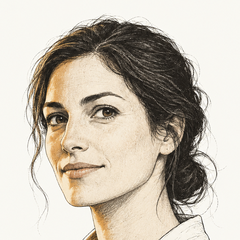
Every square millimeter of your skin holds a few pigment cells. Each one sits at the base of the epidermis and reaches out to about thirty-six of its neighbors with long arms, handing them small packets of melanin. The neighbors stack those packets over their nuclei like tiny umbrellas. That is what a tan is: a skin that has decided to shade its own DNA.
Melanoma is the cancer of the cell that makes the umbrellas.
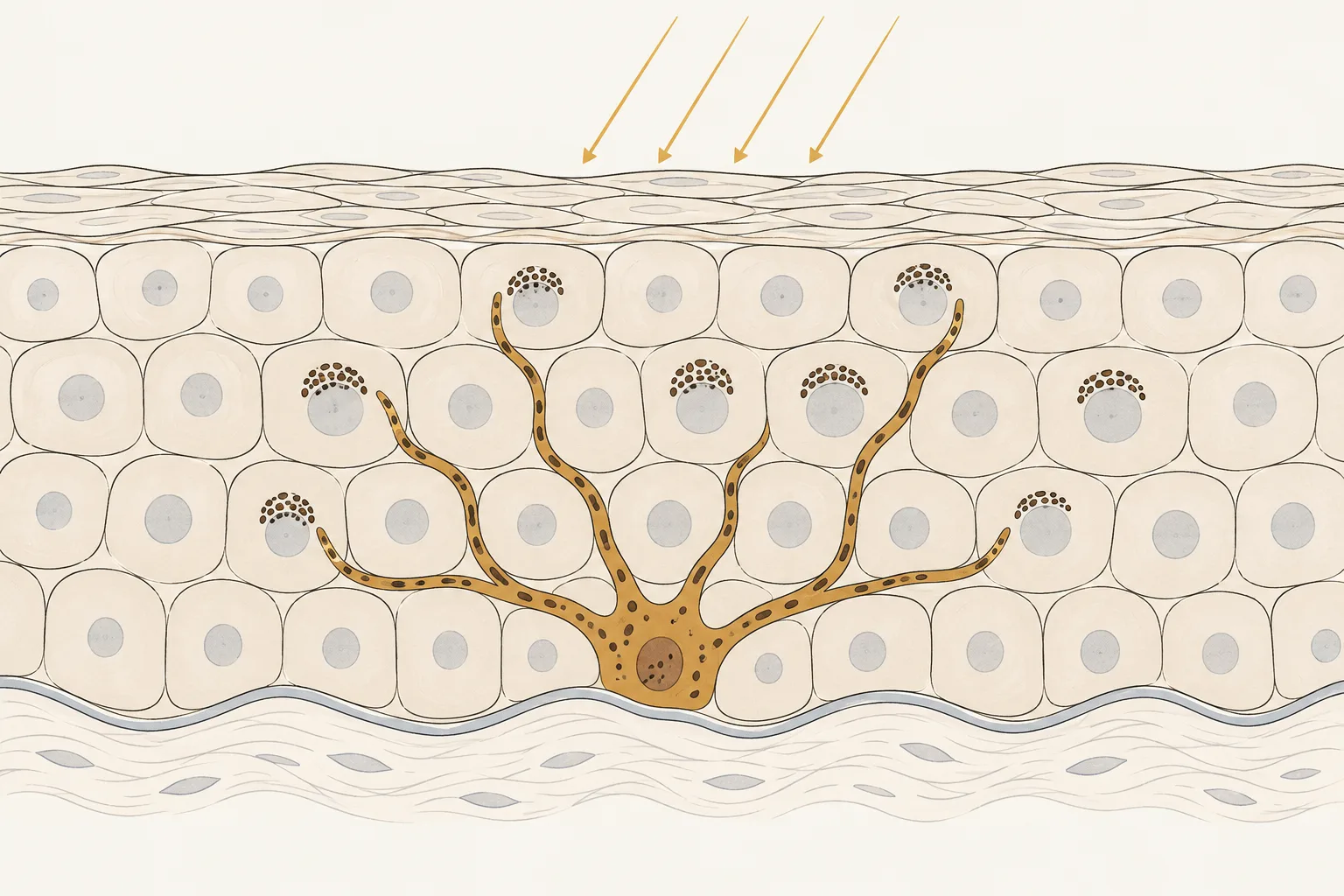
That fact sits underneath everything strange about this disease. The cell built to defend us against sunlight is the one that goes wrong in the light. And the pigment it makes, which we have spent a century calling protective, turns out to do some of the damage itself, for hours after you have gone indoors.
Ultraviolet radiation in sunlight is a factor in most cutaneous melanoma. A global model attributed 267,353 of the 331,722 melanomas estimated for 2022 to UV, about four in five, which works out to about three cases per 100,000 people alive that year. The studies behind that number never measured the sunlight that reached any of the people counted. Most people who spend their lives in the sun never develop melanoma. The exposure that matters most is intense, intermittent, and burning, on skin that tans poorly. 1; 2; 3; 4; 5
This page covers where melanoma grows, how the sun came to be blamed for it, which kinds of sun go with it, what ultraviolet does to a pigment cell, who gets the disease, and what sunscreen and tanning beds change. Each study is named as either real sun, a lamp, or a record of where and how people lived.
Key facts
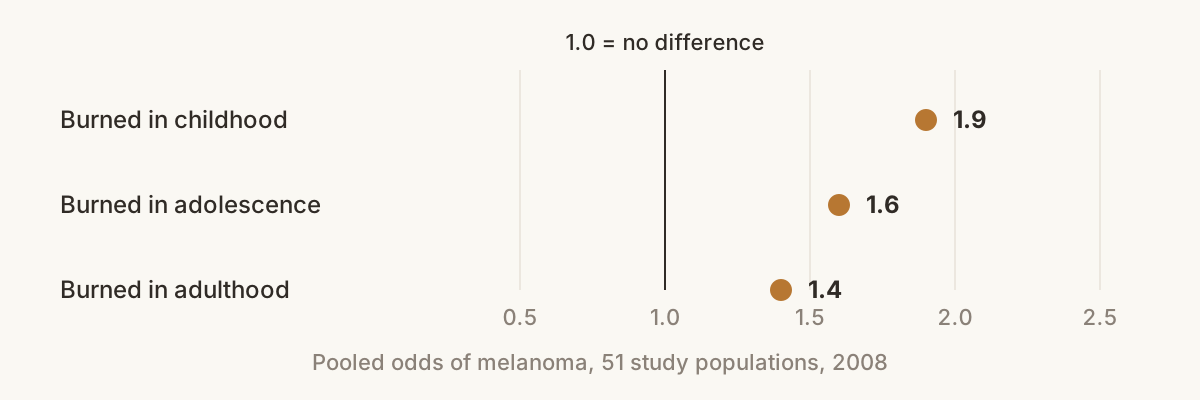
- People who had ever been severely burned carried about 1.9 times the melanoma odds for childhood burns, 1.6 for adolescence, and 1.4 for adulthood. 3
- Across 57 pooled studies, intermittent exposure raised melanoma risk by about 60 percent, sunburn history doubled it, and chronic exposure pooled at no effect. 4
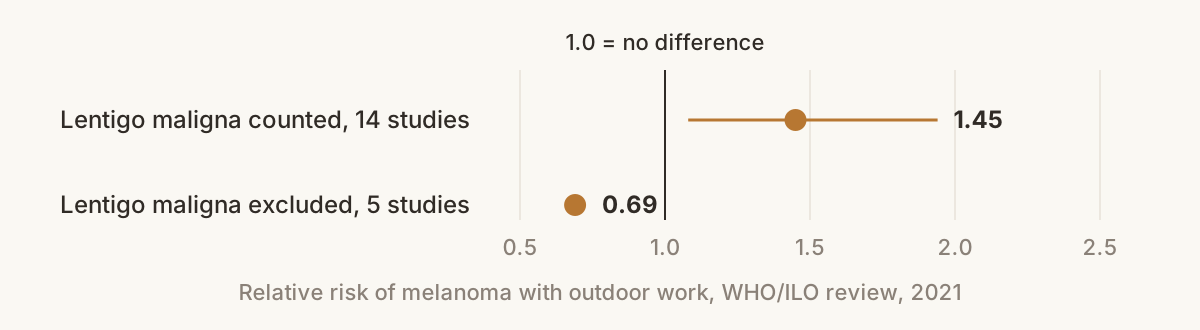
- Outdoor work raised melanoma risk about 45 percent when lentigo maligna was counted, and appeared to lower it when that subtype was excluded. 6
- The Danish job-record cohort of 2,943,336 workers found melanoma risk rising with cumulative occupational UV to 57 percent above baseline in the top quarter. 7
- Cutaneous melanomas carried about 49 mutations per megabase with a UV signature, against under 3 for acral and mucosal melanomas. 8
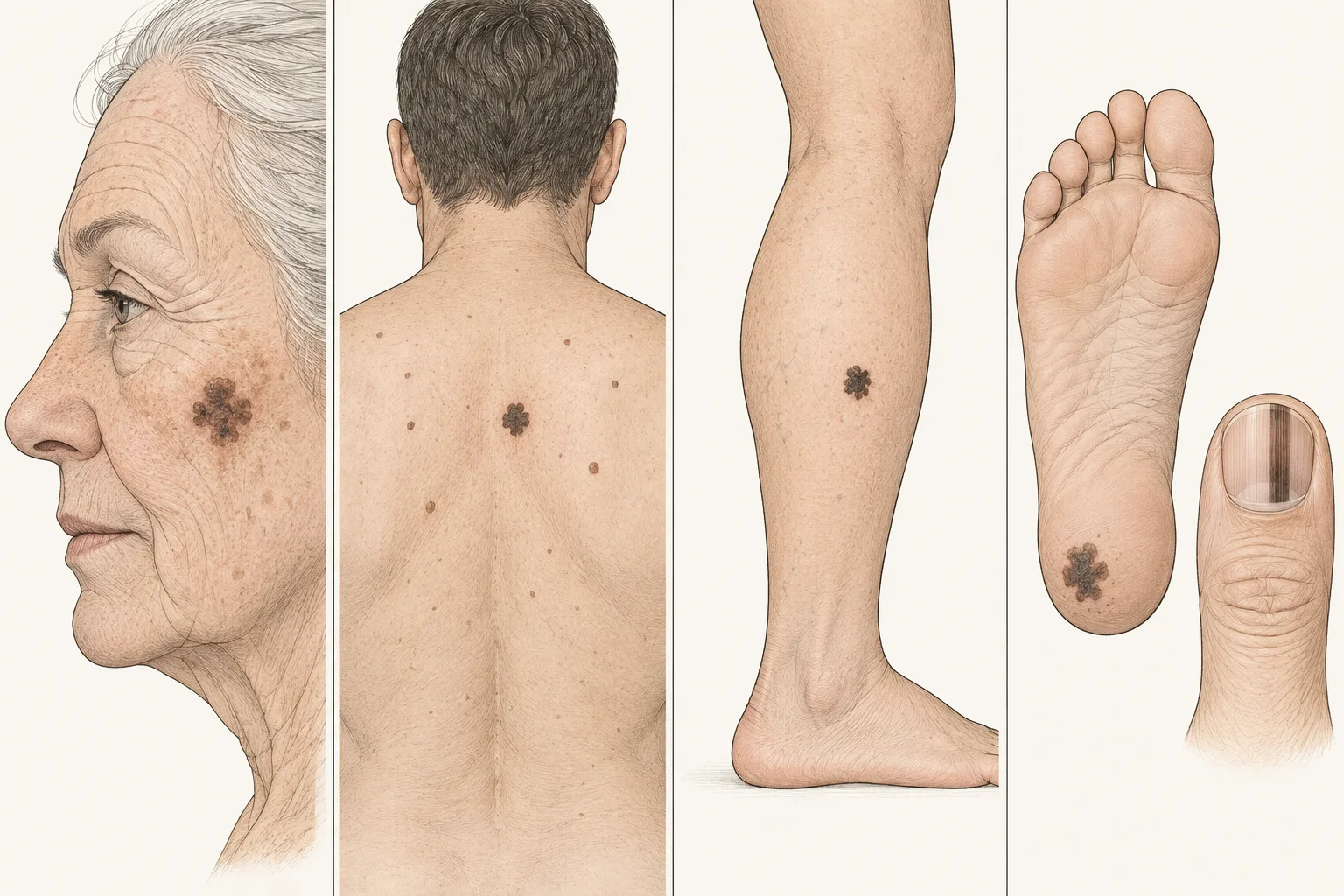
Melanoma grows most often on the back in men and the legs in women
Melanoma is rare next to the other skin cancers. Basal cell and squamous cell carcinomas outnumber it many times over. But those two almost never kill, and melanoma does. It grows from a melanocyte, spreads early, and once it reaches the lymph nodes it is a disease of the whole body. Until 2010 no drug had lengthened survival once it had spread. That year a trial of ipilimumab, which works by unlocking the immune system, reported a median survival of 10 months against 6.4. 9
The skin cancers of old farmers and fishermen grow on faces, ears, and the backs of hands, the skin that sees the most sun. Melanoma does not follow that map. When nurse-interviewers at Roswell Park in Buffalo recorded the site of 404 melanomas in the 1970s, the tumors on men's trunks and on women's legs outran those regions' share of the body's skin. That is skin most people uncover for a few weeks a year. 10
Pathologists sort melanomas into families by how they look under the microscope. Superficial spreading melanoma is the common one, a flat, slowly widening tumor of the trunk and legs. Nodular melanoma is a lump that grows downward early. Lentigo maligna melanoma is a slow, flat patch on the weathered face of an older person. Acral melanoma grows on the palms, the soles, and under the nails. When the Western Canada Melanoma Study classified two years of new melanomas from four provinces, it counted 415 superficial spreading, 128 nodular, 56 lentigo maligna, and 14 acral. 11
The families also differ in their DNA. In 2005 a San Francisco team gathered 126 stored melanomas from seven medical centers: 30 from skin with long-standing sun damage, 40 from skin without it, 36 from palms, soles, and nails, and 20 from the moist linings inside the body. They judged sun damage under the microscope, by a change in the skin's supporting tissue called solar elastosis. Among the tumors from skin without that damage, 81 percent carried a mutation in one of two growth genes, BRAF or NRAS. Most tumors in the other three groups carried neither. The pattern of gained and lost DNA alone was enough to sort a tumor into its group about 70 percent of the time. 12
Most of what is known about melanoma and the sun is about superficial spreading melanoma in pale people, because that is where the cases are.
The numbers have been climbing for as long as anyone has counted. Buffalo's tumor registry recorded fewer than 3 cases per 100,000 in 1960 and more than 5 by the early 1980s. Rates in the United States, Britain, Sweden, and Norway rose by more than 3 percent a year from 1982 to 2011, and a 2016 projection expected US white cases to rise from about 70,000 a year to 116,000 by 2031. Australia is the exception. Its rate has been falling since 2005, slowly, after thirty years of the SunSmart campaign. 10; 13
Melanoma deaths rise toward the equator, except inside Europe
The geography came first. In 1956 Henry Lancaster, an Australian statistician, laid melanoma death rates for people of European descent on a map. The closer to the equator, the more deaths. The pattern held between the British Isles and Australia, between the two islands of New Zealand, between South Africa and Canada. He called it the latitude gradient, and fair skin in strong sun has been the recipe ever since. 14
Inside Europe the gradient ran backwards. Sweden and Norway had more melanoma than Italy and Spain, because complexion mattered more than sunshine. Maps of whole countries could take the field only so far, so between about 1975 and 1985 researchers went to ask individual patients how they had lived. In 1992 the International Agency for Research on Cancer declared solar radiation a proven human carcinogen. 15
Common melanoma and lentigo maligna
Melanoma is not one exposure disease. In 1980 and 1981 D'Arcy Holman and Bruce Armstrong interviewed every melanoma patient they could reach in Western Australia, 511 people, and 511 neighbors matched to them by sex, age, and district. Two thirds of the migrants among them were British. Perth gets about 2,700 hours of bright sunshine a year, and London gets about 1,400. 16
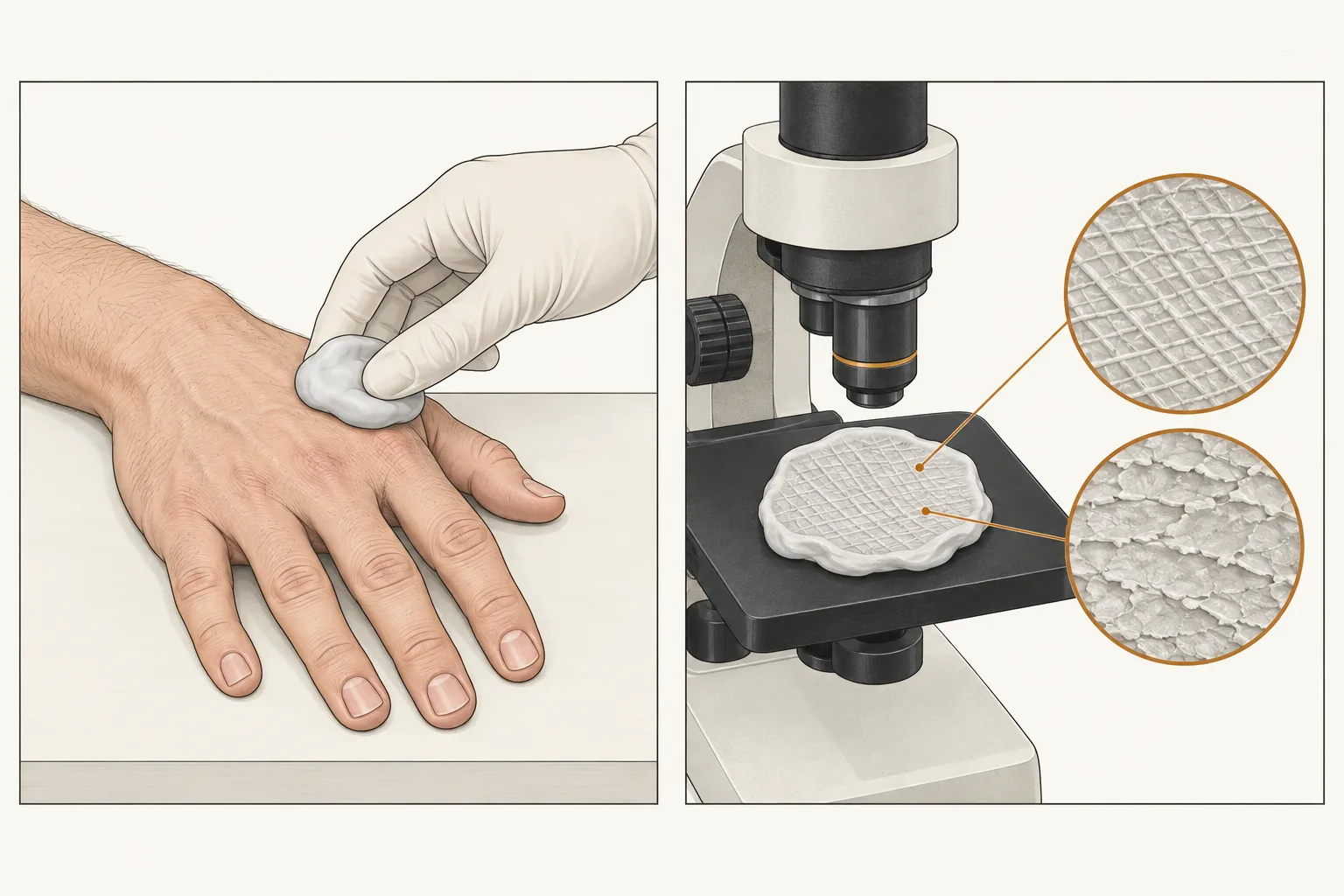
The Perth team did not rely on memory alone. Interviewers wrote down every place a person had lived for more than six months and matched each one to weather-station records of sunshine. They counted the raised moles on each person's arms. And they pressed dental impression material onto the back of each person's hand, then graded the fine skin lines in the cast under a microscope for sun damage, without knowing whose hand it was. 16
For superficial spreading melanoma, the age at which a migrant arrived mattered more than anything counted afterward. Migrants who arrived before age ten carried risk near that of people born in Australia. Arrival at fifteen to nineteen cut the odds to about a quarter, and later arrival added no further reduction. Once age at arrival was in the model, total years in Australia added nothing. Children who arrived early also grew more moles on their arms. 16
Lentigo maligna melanoma ran on the opposite clock in the same population. It tracked years of residence, the sun damage in the hand cast, and past non-melanoma skin cancer. Under the microscope, 89 percent of the lentigo maligna tumors sat in skin with moderate or severe solar elastosis, against 16 percent of the other melanomas. 16
In 2003 David Whiteman's group in Queensland compared melanoma patients with each other. People whose melanoma grew on the head and neck had few moles and many solar keratoses, the rough scaly spots of sun-worn skin. People whose melanoma grew on the trunk had many moles and few keratoses. 17
In 2006 Maria Teresa Landi's group tied that split to coloring. People with variants of MC1R, the gene behind red hair and freckling, got melanomas driven by BRAF, and got them on skin without sun damage. More than 80 percent of such tumors in people with two variant copies carried the mutation, against about 30 percent in people with normal MC1R. BRAF V600E is not a mutation of the kind ultraviolet writes. 18
A San Francisco group later read that history out of the tumors. They took 37 stored melanomas that still had the mole they grew from beside them, cut out 150 separate regions, and had eight specialists grade each region from benign to malignant before sequencing it. All thirteen regions that every specialist called benign carried one mutation, BRAF V600E, and no other known cancer-driving change. The in-between regions carried several. The mutation pattern that ultraviolet leaves was present at every stage, from mole to invasive tumor. 19
Sunburns predict melanoma; exposure does not
From 1979 to 1985, interview studies in Oslo, Glasgow, Boston, Buffalo, Queensland, and western Canada reconstructed patients' outdoor lives. In Buffalo, nurses took each person through a lifetime of homes and jobs and estimated the hours spent outdoors, winter and summer, year by year. In western Canada, interviewers visited 595 patients at home, along with 595 people drawn from provincial health insurance lists, and recorded every job held for six months or more, every outdoor pastime by decade, and every holiday of a week or more. They weighted each hour by the clothes worn, from 0.89 of the body's skin for a man in bathing trunks down to 0.035 for someone in heavy winter clothing. None of these studies measured sunlight. They measured what people could remember. 10; 11
Total hours outside did not track melanoma risk. Buffalo found the reverse: light-complexioned men above 160,000 lifetime sun hours carried an odds ratio of 0.18 against the least-exposed men. Western Canada found no trend in the sum of all exposure. What it did find was in the bathing-suit hours. One to four hours a week of summer swimming and sunbathing carried 1.7 times the risk of almost none, after adjusting for hair color, skin color, and freckling. People who took four or more sunny holidays a decade had 1.8 times the risk of people who took none. Men with the most outdoor work had half the risk of men with none. 20; 21; 22; 10; 11
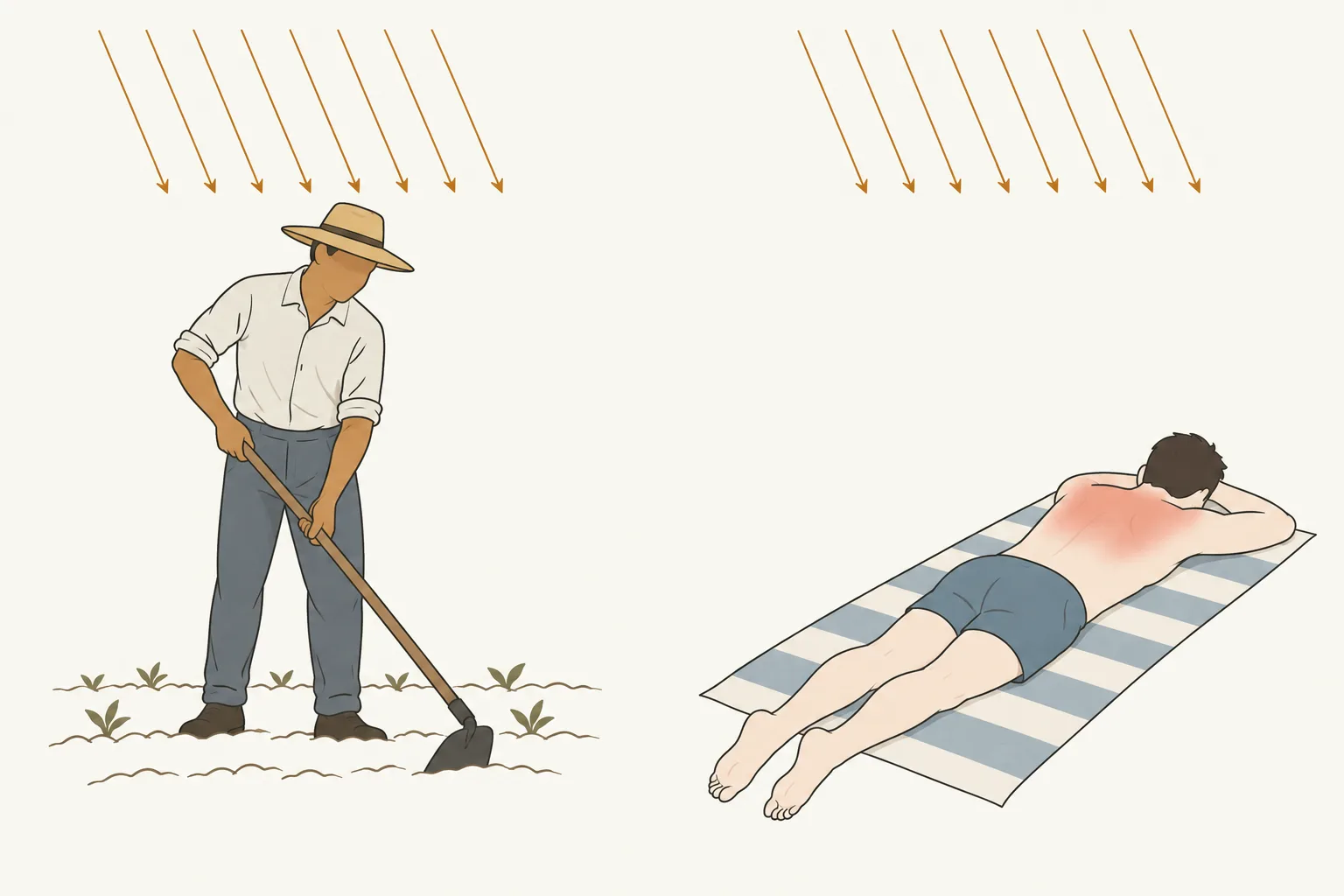
The Western Canada team checked whether patients were shaping their answers to fit what they had heard about sun and skin cancer. Patients and comparison people gave almost identical answers about sunlamps and about smoking. 11
Burns tracked risk everywhere they were counted. In Glasgow, 63 of 113 patients recalled a severe burn in the five years before diagnosis, against 24 of 113 comparison people. Boston found blistering adolescent burns doubled the odds. Queensland found six or more lifetime severe burns carried about two and a half times the risk of zero or one. Oslo found the sharpest separation in how the skin reacts: poor sun tolerance and easy freckling, strongest in younger people. 20; 21; 22; 23
The pooled evidence kept that shape. The 2008 sunburn meta-analysis put the odds for people who had ever burned at 1.9 for childhood burns, 1.6 for adolescent burns, and 1.4 for adult burns, with risk climbing with burn count in every period. The 2005 exposure meta-analysis found intermittent exposure at about 1.6, sunburn history at about 2.0, and chronic exposure near 1.0. Sunburn, tanning, and melanoma risk follows the burn studies one by one. 3; 4
Outdoor work and melanoma risk
For twenty years, the near-one chronic-exposure estimate supported the claim that steady sun protects against melanoma. The starkest single inverse came from Buffalo, and it rested on few people. The top band of lifetime hours held 11 light-complexioned patients and 15 comparison men. The authors offered the two readings that still stand: steady exposure maintains a shielding tan, or burn-prone men avoid outdoor hours and their susceptibility confounds the total. They wrote that both could be true at once. 10
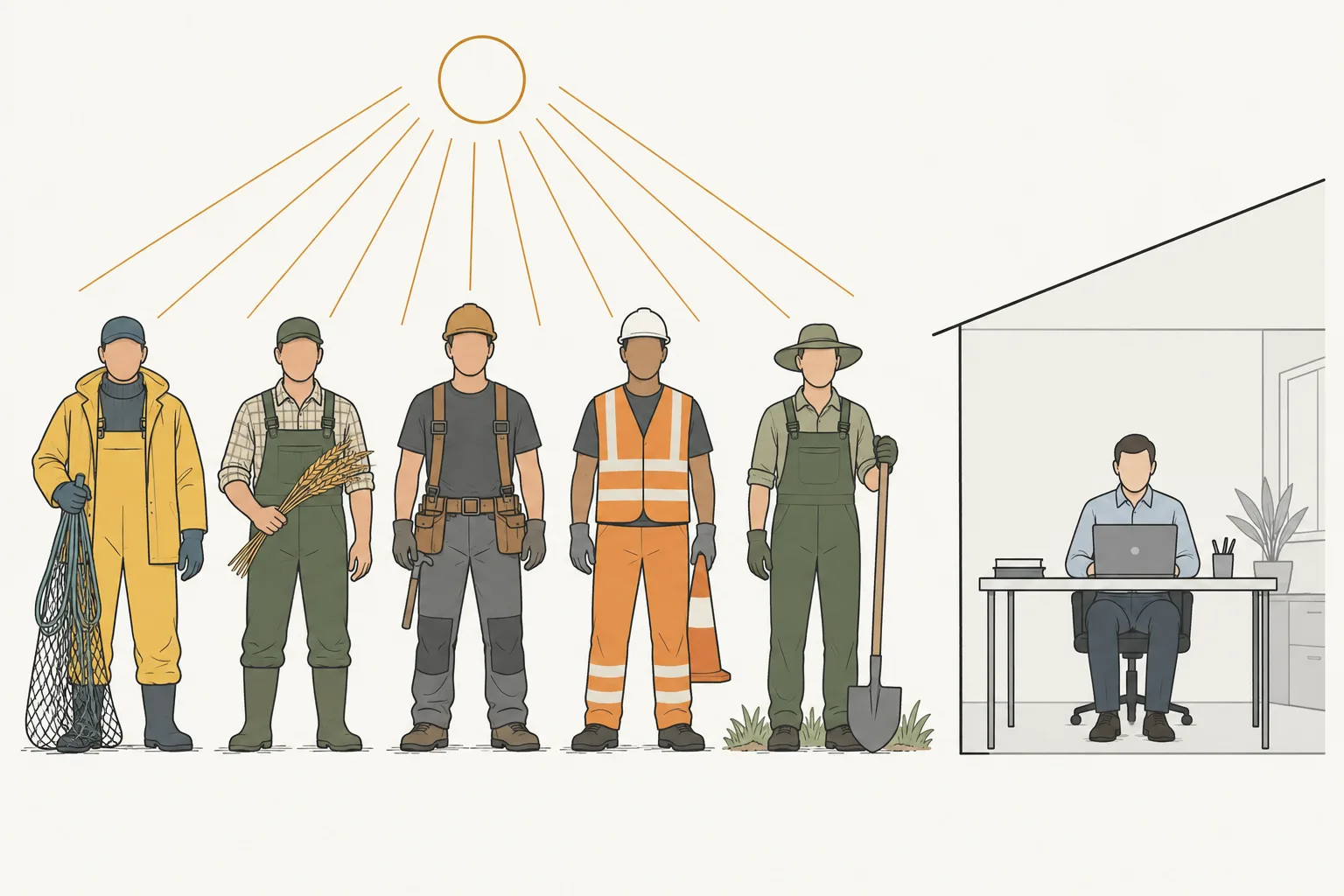
In 2021 a review for the World Health Organization and the International Labour Organization pooled the occupational studies, 53 of them across every skin cancer, from 26 countries. Not one had put an ultraviolet meter on a worker. For melanoma the pooled answer depended on one classification decision. The fourteen studies that counted every subtype gave a relative risk of about 1.45 for outdoor work. The five that excluded lentigo maligna gave about 0.69. Outdoor workers accumulate the cumulative-exposure tumor. Leave it out and they look protected. The reviewers rated the melanoma evidence as low in quality and declined to estimate how much melanoma outdoor work causes. 6
Denmark then supplied the prospective result. Kristensen and colleagues linked job records for nearly three million workers to first melanomas through 19 years of median follow-up, with exposure assigned from job histories rather than memory. Risk rose across quartiles to 1.57 in the top quarter. The design cannot see clothing, shade, leisure sun, or subtypes. The interview studies saw those poorly and relied on memory for all of them. 7
UV damage in DNA and tumours
Melanomas from sun-exposed skin carry the mark of ultraviolet in their DNA. Ultraviolet damages DNA mostly where two particular letters sit side by side, and the misspellings it leaves there form a pattern, called a UV signature, that a sequencer can recognize years later. In 2017 an Australian team read the whole genomes of 183 melanomas from tissue collections: 140 from ordinary skin, 35 from palms, soles, and nails, and 8 from inner linings. UV signatures dominated 136 of the 140 skin tumours, which carried more than eighteen times as many small mutations as the others. Three acral tumours carried a dominant UV signature, and four skin tumours did not. 8
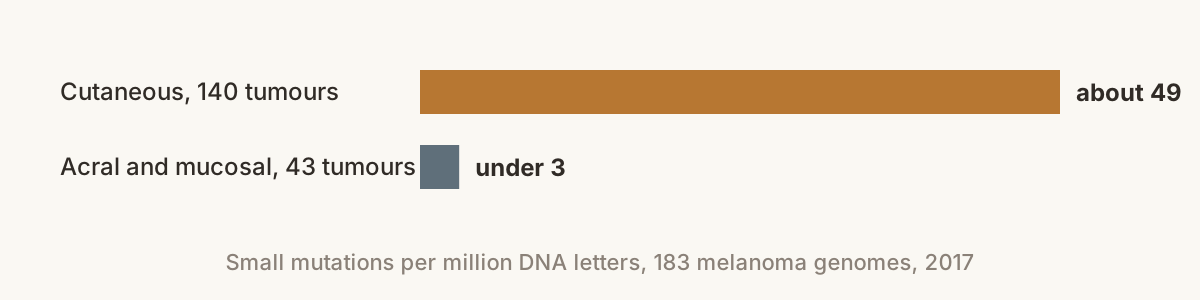
A signature in a tumour says that ultraviolet damaged that cell's ancestors. It says nothing about how many hours of sun the person had, or whether any of it came from a lamp.
Damage also continues after exposure ends. In 2015 Douglas Brash's group at Yale shone a UVA lamp on mouse pigment cells in a dish and measured DNA damage afterward. In cells without pigment, the dimers, pairs of DNA letters welded together by ultraviolet, peaked at once and repair began. In pigmented cells the dimers kept forming for more than three hours after the lamp went off, and those late dimers were the majority. Ultraviolet had set off a chain of reactive oxygen and nitrogen chemistry that broke melanin into fragments, and the fragments carried enough energy to weld DNA on contact, with no light present. 24
The Yale team proved the excited state by putting melanocytes in a scintillation counter and counting the single photons of faint light the cells gave off for hours. A chemical cousin of the preservative in bread, which drains that kind of stored energy, stopped the damage. Red-yellow pheomelanin did it twice as well as brown eumelanin. The paper ended by proposing a sunscreen for the evening after, and by noting that every measurement of UV damage taken right after exposure had been an undercount. 24
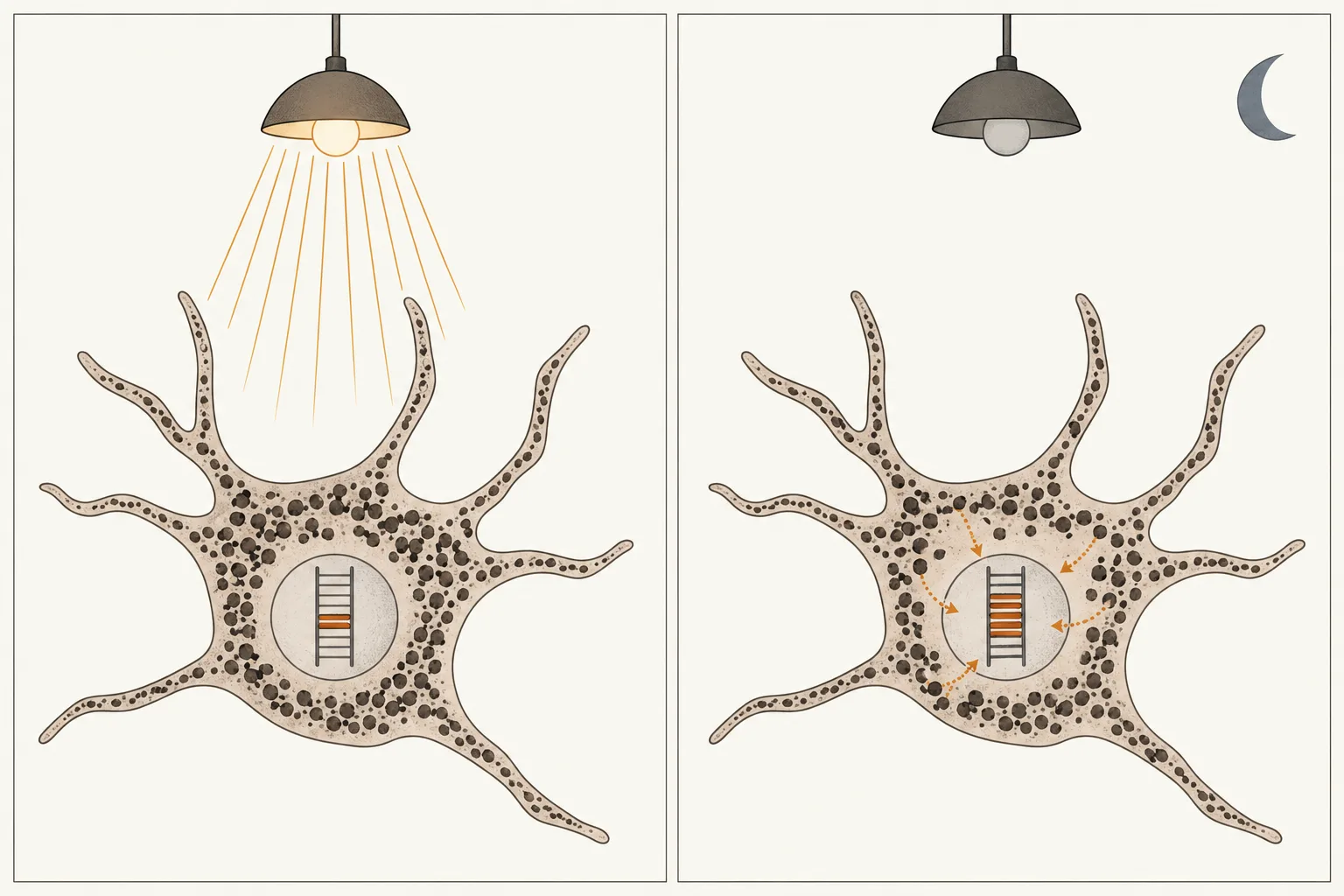
In 2021 a London team tested this in people. Five volunteers with very fair skin and five with deeply pigmented skin, all of Nigerian or Kenyan background, took one lamp dose of simulated sunlight on buttock skin that had never seen the sun. The doses were matched for redness, 9 standard erythema doses for the fair group and 90 for the dark group. Biopsies were taken at once and at 1, 2, 4, 6, and 24 hours. In both groups the dimers peaked one to two hours after the lamp went off. In dark skin, the melanin-rich bottom layer showed no delayed dimers and was clear within a day. In fair skin, the bottom layer still held dimers a day later. 25
The repair work is slow everywhere it has been measured. A Finnish and Swedish team built a lamp to mimic noon summer sunlight in Helsinki and gave one dose to the buttock skin and the moles of 12 melanoma patients and 10 people without melanoma. About 46 percent of one kind of dimer remained at 48 hours, and about 10 percent was still unrepaired at three weeks, in patients and the others alike. Melanocytes also repair UV lesions worse than neighboring fibroblasts, and they are highly sensitive to the hydrogen peroxide that irradiated neighboring cells leak. 26; 27
Melanin also gets in the way of repair. Wang and colleagues found that it binds DNA and physically blocks the repair enzymes. Darkly pigmented melanocytes in a dish repaired worse and mutated more than lightly pigmented ones. 28
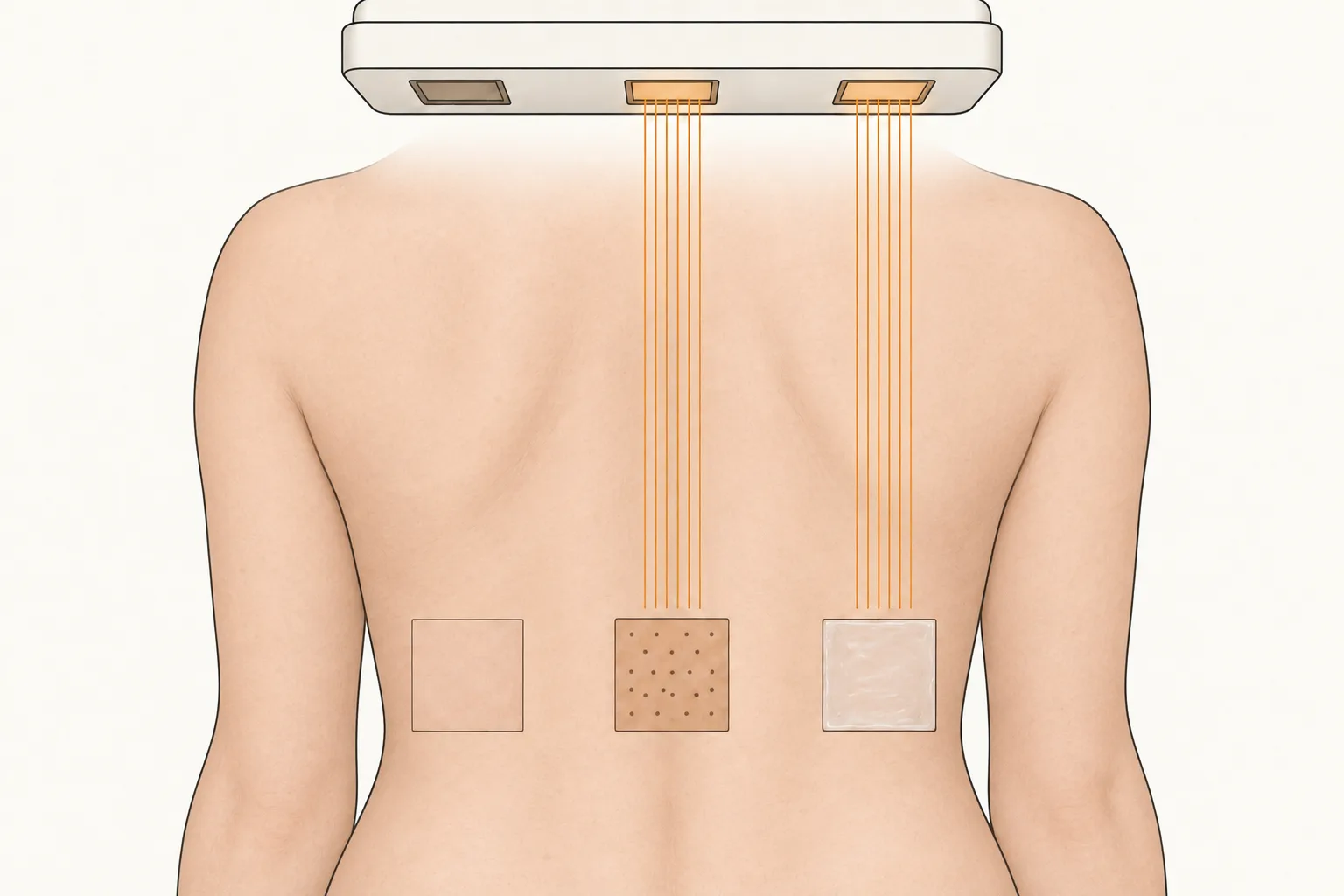
One human experiment connects dose to what pigment cells do next. In Brisbane, 57 fair-skinned volunteers each lent three small patches of skin on the small of the back. One was left alone, one took a lamp dose of simulated sun at twice that person's burn threshold, and one took the same dose under SPF 30 sunscreen applied at the full laboratory thickness. At 24 hours, 36.6 percent of melanocytes at the exposed patch carried dimers, against none under the sunscreen. By two weeks the exposed patch had tanned and held roughly twice as many melanocytes as before. Under the sunscreen there was no damage, no new melanocytes, and no tan. 29
Pigment genes and skin color
MC1R is a gene for a receptor on the melanocyte that helps set which melanin it makes, brown-black eumelanin or red-yellow pheomelanin. Some variants give red hair, freckles, and skin that burns. In the M-SKIP pooling of 3,830 melanoma patients and 2,619 people without melanoma, carrying any variant raised melanoma odds by about 70 percent. Almost all of that stayed after the researchers accounted for hair color, freckles, and skin type, which leaves about 60 percent that the visible coloring does not explain. 30
Devarati Mitra's group at Massachusetts General Hospital then took the light away. They bred three kinds of mice that differed in pigment: red mice with a disabled MC1R, black mice, and albino mice that make no pigment. All carried a BRAF mutation that the researchers could switch on in the melanocytes. No mouse received any ultraviolet. More than half the red mice developed invasive melanoma within a year, and the black and albino mice developed far fewer tumors, later. When the team bred the albino trait into the red mice, so that they kept the disabled receptor but could no longer make red pigment, the mice were protected. The red mice also carried more oxidative damage in their skin. The result belongs to engineered mice with a cancer mutation already switched on. 31
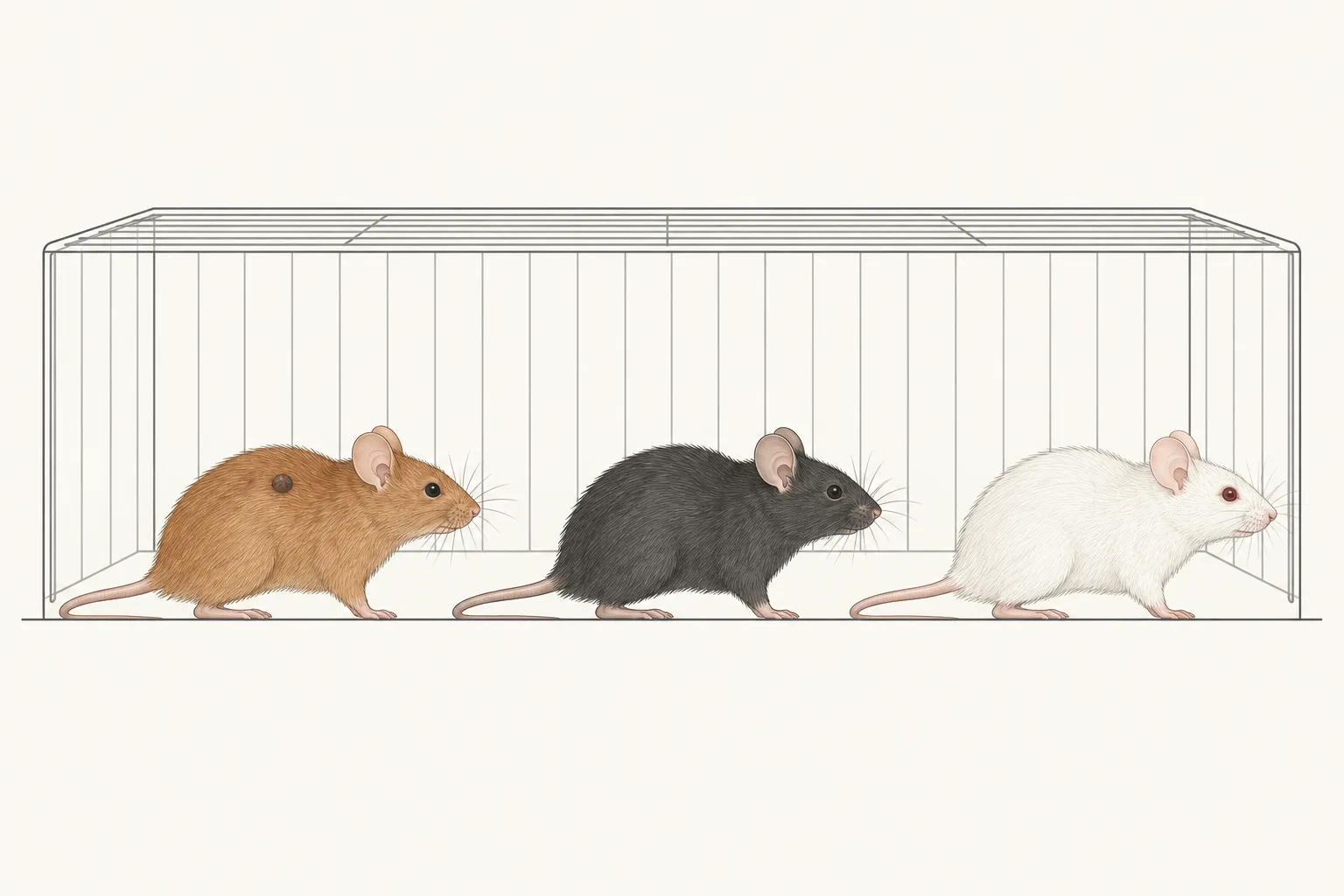
Two other mouse experiments of those years point at pigment and the immune system. Frances Noonan's group showed in 2012 that UVA lamps caused melanoma in mice only if the mice had melanin, while UVB caused it with or without pigment. Zaidi's group at the National Cancer Institute showed that UVB drew interferon-producing macrophages into the skin of newborn mice, and those immune cells helped melanocytes survive and evade the body's defenses. 32; 33
Protection in dark skin is large and specific. In the London lamp study, melanin protected the DNA of the bottom layer of the epidermis about sixtyfold in deeply pigmented skin. The population pattern still does not switch off. A University of Miami team collected all 64,305 invasive melanomas recorded by the cancer registries of New York, New Jersey, Illinois, Florida, Texas, and California and set the rates against each state's average UV index. In every group, melanoma rose with the UV index and fell with latitude, and the fit was tightest in Black men. Their highest rate, in California and Florida, was 1.3 per 100,000 a year, when white men in California were at 28.8. The study compared state averages. It has no record of any one person's sun. 25; 34
Melanoma patients burn and repair like everyone else; their immune cells react differently
Several laboratories have tested whether melanoma patients respond to ultraviolet differently from other people. A Copenhagen team matched patients and healthy volunteers on measured skin pigment and found they sunburned under a lamp at identical thresholds. The Finnish and Swedish team found identical DNA repair in patients' skin and moles. 35; 26
A London team found that patients' Langerhans cells, the skin's immune sentinels, crashed harder after simulated sun and then overshot to nearly double their starting number. In Brussels in 2006, Pedeux and colleagues gave blood lymphocytes a small UVB dose and found that patients under forty showed three times the cell death of people without melanoma, with an odds ratio of 9, independent of skin type. Patients over sixty looked normal. 36; 37
Melanoma risk across populations
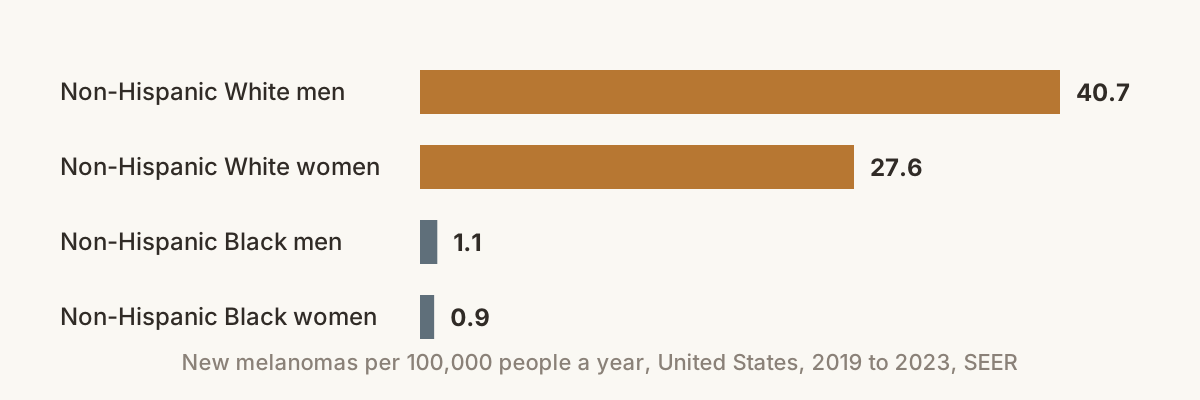
The absolute numbers differ enormously by population. For 2019 to 2023, age-adjusted US melanoma incidence per 100,000 was 40.7 in non-Hispanic White men and 27.6 in non-Hispanic White women, against 1.1 and 0.9 in non-Hispanic Black men and women. SEER estimates lifetime diagnosis at 2.2 percent across the whole US population, a population average, not a personal prediction. The registry categories combine ancestry, skin tone, access, and diagnosis, so they are not biology. 5
The corpus says little about the middle of the pigment range. No stored melanoma study in this corpus reports rates for olive-skinned southern Europeans, Middle Eastern, South Asian, or East Asian populations as its own group. The six-state registry study included 2,287 Hispanic cases and found rates rising with UV index in every grouping, but ethnicity overlapped race in four of the six registries and the paper reports no Hispanic-specific rate. M-SKIP, the largest MC1R pooling, describes over 97 percent of its participants as Caucasian. The middle of the range is where most of the world's population lives and where this literature is thinnest. 34; 30
What the middle shares with the extremes is the site pattern. Acral melanomas on palms, soles, and nail beds, and mucosal melanomas inside the mouth, nose, and genital areas, dominate the cases in dark-skinned populations and carry few UV-signature mutations. The same tumours occur, rarely, in fair-skinned populations, and 4 of 140 cutaneous tumours in the genome study lacked a UV signature. The population gradient is steep; the tumour biology overlaps at the edges. 8; 5
Sunscreen and tanning beds
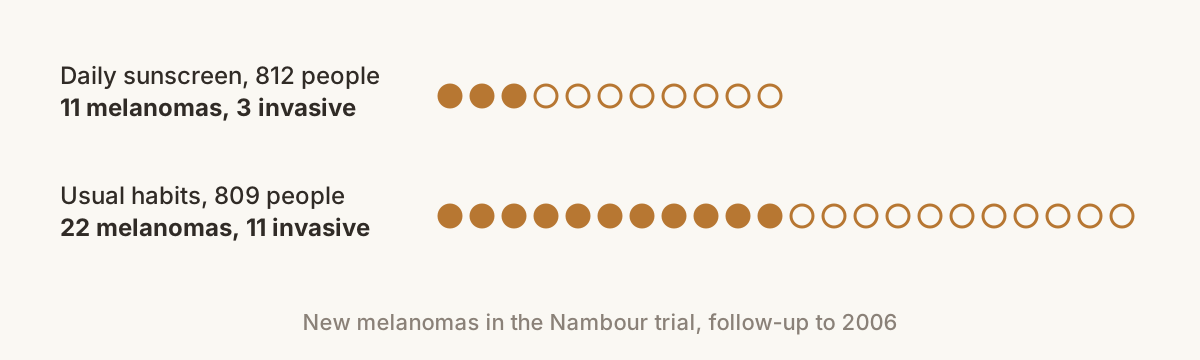
Nambour is the only randomized sunscreen trial with melanoma follow-up. In 1992 Adele Green's group assigned 1,621 adults in the Queensland town of Nambour, by chance, to one of two habits. The 812 in the daily group got an unlimited supply of broad-spectrum SPF 16 sunscreen and were asked to put it on their head, neck, arms, and hands every morning. The other 809 used sunscreen as they pleased. The free sunscreen stopped in 1996, and the researchers followed pathology and registry records to 2006. The daily group developed 11 new melanomas against 22, and 3 invasive melanomas against 11. About three quarters of the daily group had kept to the habit during the trial. Melanoma was not the outcome the trial was built for, the counts are small, and the margin of error reaches from a large cut to almost none. It is the only experimental result available. 38
Observational sunscreen studies cannot replace that trial. Silva pooled 29 studies and 313,717 participants: melanoma odds for sunscreen use were 1.10, effectively no effect, with wide disagreement between studies. The earlier a study's data collection, the worse sunscreen looked, from 2.35 before the 1980s toward the null by the early 1990s. People who burn easily both buy sunscreen and develop melanoma, and pooled interviews could not separate the two. Buffalo had seen this in the 1970s, when men who used sunscreen had about twice the melanoma risk of men who did not. 39; 10
Indoor tanning supplies the artificial-light comparison. Across 36 studies and 14,583 melanomas, ever using a tanning device carried about 27 percent higher melanoma risk, with first use at twenty or younger at 1.47 and heavy use at 1.52. The five studies that asked about tanning before anyone was ill gave 1.20, and the 31 that asked afterward gave 1.30. The original studies drew their lines for early and heavy use in different places, so those two headings are loose. A tanning bed delivers an intense intermittent dose on purpose. 40
Misconceptions
What people believe
Sun exposure causes melanoma, more sun means more melanoma, and tanning beds are safer because the dose is controlled.
What the studies show
Intense intermittent burning exposure causes most cutaneous melanoma, especially on skin that tans poorly and especially in childhood and adolescence. Steady occupational exposure is not protective and probably carries a modest harm. Tanning beds raise melanoma risk with dose, youth, and early use. Palms, soles, and mucosal melanomas usually follow a different genomic route, with limited UV-signature exceptions going both ways. A global model puts the UV-attributable share at 80.6 percent, but that value compares countries with a barely exposed reference population and assumes acral tumours are non-UV. 3; 4; 6; 7; 40; 8; 1
Questions people ask
Are all melanomas caused by the sun?
No. Acral melanomas on palms, soles, and nail beds, and mucosal melanomas inside the mouth, nose, and genital areas, usually carry few UV-signature mutations and different drivers. Three of 35 acral tumours were UV-dominant in the genome study. 8
Can one bad sunburn cause melanoma?
No study turns one burn into a personal percentage. The pooled evidence puts ever-burned risk at 1.4 to 1.9 by life period and rising with burn count. Queensland found no signal for one lifetime burn, but it had too little power to declare one burn safe. A burn records a heavy acute dose reaching the melanocyte layer. 3; 23
Does outdoor work protect against melanoma?
The older inverse results do not survive closer inspection. The WHO/ILO review found apparent protection only when studies excluded lentigo maligna, the cumulative-exposure melanoma of weathered skin. Denmark's registry cohort, which replaced memory with job records, found rising risk with cumulative occupational dose. 6; 7
Does sunscreen prevent melanoma?
The only randomized trial says probably. Nambour found 11 melanomas with daily sunscreen against 22 without it, and 3 invasive melanomas against 11, on small numbers. Observational studies found no protection because susceptible people select sunscreen use. Correct application also matters: one moderate dose multiplied melanocytes in Brisbane, while sunscreened control sites showed no DNA-lesion cascade. 38; 39; 29
Can dark skin get melanoma from the sun?
Yes. The risk is much lower, and basal-layer melanin strongly suppresses UV DNA damage, but registry incidence in Black men rose with state UV index. Most acral tumours are UV-signature negative, yet three of 35 were UV-dominant. 34; 8; 25
Do tanning beds cause melanoma?
Yes. Ever use raised melanoma risk by about 27 percent across 36 studies, with stronger associations for early first use, heavier use, and diagnosis before fifty. 40
What we do not know
No study behind these numbers measured anyone's sunlight. The large studies asked people to remember decades of summers, read job titles off employment records, or averaged the light over a state. The interviewers who built the best exposure histories of the eighties called their own numbers considerably inaccurate. The Danish cohort traded memory for job records and gained size and honesty about what it cannot see: clothing, shade, sunscreen, weekends, subtypes. Every estimate of how much melanoma the sun causes rests on one of those proxies. 11; 7
The exact work measures the wrong endpoint for the question. Cell dishes get precise doses in SED and report dimers and mutations, not cancer. Mice get engineered genes and neonatal burns, not holidays. The Brisbane volunteers got one measured dose and two weeks of biopsies, not a lifetime. Between remembered decades and exact short experiments sits the gap: which real exposures, at which ages, drive each melanoma subtype. Nobody has measured that, and no trial can assign it. 29; 8
In Brisbane, the melanocytes of people who carried red-hair variants of MC1R multiplied less after the dose, 97 percent against 164, although the first day's DNA damage was the same. Nobody has explained why the cells of the people most likely to get melanoma answer the sun with less growth. 29
The antioxidant story looks obvious and is not. N-acetylcysteine cut the dark damage in the Yale dishes by two thirds. A single oral dose did nothing measurable to human moles in a randomized trial in Utah. In mice it increased melanoma spread. Nobody yet knows what an evening-after sunscreen would look like or whether it would help. 24; 41
The causal case is strong; the dose is unknown. No study here converts it into a personal number, a safe count of burns, or an age after which caution stops mattering. The studies are small where they are exact and approximate where they are large. 3; 38; 1
Key studies
- Lancaster, 1956, Australia. Death records by latitude. The latitude gradient in people of European descent. 14
- Klepp and Magnus, 1979, Oslo. Interviews. Poor sun tolerance and freckling separated patients from comparison people. 20
- MacKie and Aitchison, 1982, Glasgow. Interviews. Severe sunburn in the five years before diagnosis. 21
- Lew and colleagues, 1983, Boston. Telephone interviews. Blistering burns in adolescence. 22
- Holman and Armstrong, 1984, Perth. Interviews, sunshine records, and hand casts. Age at arrival for common melanoma, lifetime sun for lentigo maligna. 16
- Graham and colleagues, 1985, Buffalo. Interviews. Risk fell as lifetime sun hours rose. 10
- Green and colleagues, 1985, Queensland. Interviews. Risk rose with the count of severe burns. 23
- Elwood and colleagues, 1985, Western Canada. Home interviews. Holiday and bathing-suit sun raised risk, and heavy outdoor work did not. 11
- Whiteman and colleagues, 2003, Queensland. Patients compared with patients. Many moles with trunk melanoma, sun-worn skin with head and neck melanoma. 17
- Hu and colleagues, 2004, Miami. Registry records from six states. Melanoma rose with UV index in every group. 34
- Curtin and colleagues, 2005, San Francisco. Stored tumors. Four melanoma groups with four genetic patterns. 12
- Gandini and colleagues, 2005. Fifty-seven interview studies pooled. 4
- Dennis and colleagues, 2008. Fifty-one study populations pooled, with burns counted at every age. 3
- Landi and colleagues, 2006. Stored tumors. MC1R variants and BRAF-mutant melanoma. 18
- Hodi and colleagues, 2010. Randomized drug trial. Ipilimumab, the first survival gain in advanced melanoma. 9
- Wang and colleagues, 2010. Cells in a dish. Melanin blocks DNA repair. 28
- Green and colleagues, 2011, Nambour. Real sun. The randomized sunscreen trial with a melanoma count. 38
- Noonan and colleagues, 2012. Lamp, mice. UVA melanoma requires melanin. 32
- Mitra and colleagues, 2012, Boston. Mice, no ultraviolet. Red pigment and melanoma. 31
- Hacker and colleagues, 2013, Brisbane. Lamp. Melanocytes doubled after one dose, and sunscreen stopped it. 29
- Redmond and colleagues, 2014. Lamp, cells in a dish. Irradiated neighbors stress the melanocyte. 27
- Brash laboratory, 2015, Yale. Lamp, cells in a dish. DNA damage that forms in the dark. 24
- Shain and colleagues, 2015, San Francisco. Stored tumors. The steps from mole to melanoma. 19
- Hayward and colleagues, 2017, Australia. Whole genomes of 183 melanomas. 8
- Tagliabue and colleagues, 2018. M-SKIP, seven interview studies pooled. MC1R beyond visible coloring. 30
- An and colleagues, 2021. Thirty-six tanning device studies pooled. 40
- Fajuyigbe and colleagues, 2021, London. Lamp. Dark dimers in fair and deeply pigmented human skin. 25
- WHO and ILO, 2021. Occupational studies pooled. The answer turns on lentigo maligna. 6
- Langselius and colleagues, 2025. A global model of the UV-attributable share. 1
- Kristensen and colleagues, 2026, Denmark. Job records for nearly three million workers. 7
Definitions
- Acral melanoma. Melanoma of the palms, the soles, and the skin under the nails.
- BRAF. A gene that tells a cell when to grow. One mutation of it, V600E, was the only cancer-driving change in the benign mole regions of the mole-to-melanoma evolution study.
- Cutaneous melanoma. Melanoma of the skin, as distinct from melanoma of the eye or of the inner linings of the body.
- Dimer. Two neighboring DNA letters welded together by ultraviolet. The full name is cyclobutane pyrimidine dimer. It is the commonest injury ultraviolet does to DNA.
- Epidermis. The outer layer of the skin, about a tenth of a millimeter thick over most of the body. Its bottom layer holds the dividing cells and the melanocytes.
- Eumelanin and pheomelanin. The two kinds of melanin. Eumelanin is brown-black. Pheomelanin is red-yellow and is the main pigment of red hair.
- Intermittent exposure. Sun taken in short heavy doses, such as holidays and weekends, on skin that is covered the rest of the time.
- Interview study. Called a case-control study in the journals. Researchers interview people who already have a disease and a comparison group who do not, and look for differences in what the two groups recall.
- Lentigo maligna melanoma. A slow-growing, flat melanoma found mostly on the faces of older people with many years of sun behind them.
- MC1R. A gene for a receptor on the melanocyte that helps set which kind of melanin a person makes. Some variants give red hair, freckles, and skin that burns easily.
- Melanin. The pigment of skin and hair. It absorbs ultraviolet.
- Melanocyte. The cell that makes melanin. Melanocytes sit in the bottom layer of the epidermis and pass their pigment to the cells around them. Melanoma is the cancer of this cell.
- Mucosal melanoma. Melanoma of the moist linings inside the mouth, nose, and genital areas.
- Odds ratio and relative risk. How often one group gets a disease compared with another. 1.0 means no difference, 2.0 means twice as often, and 0.5 means half as often.
- Pooled analysis. Called a meta-analysis in the journals. It combines the results of many separate studies into one estimate.
- Randomized trial. A study in which chance decides who gets the treatment, so that the groups are alike in everything else, apart from chance.
- Solar elastosis. A change in the supporting tissue of the skin after many years of sun. Pathologists see it under the microscope and use it as a record of long-term exposure.
- Standard erythema dose (SED). A fixed amount of skin-reddening ultraviolet, the same for everyone, used to report a measured dose.
- Superficial spreading melanoma. The commonest melanoma, a flat tumor that widens slowly, mostly on the trunk and legs.
- UV signature. The pattern of DNA misspellings that ultraviolet leaves behind, read from a tumor by sequencing.
Statistics
Among 507 matched pairs in the Western Australian melanoma study, the tumours split into 267 superficial spreading melanomas, 89 unclassified, 86 Hutchinson's melanotic freckle melanomas and 51 nodular melanomas. 16
Among 214 male melanoma patients at Roswell Park in Buffalo, 48.1 percent of the tumours sat on the trunk, which carries about 34 percent of the skin surface. 10
Among 186 female melanoma patients in the same Buffalo series, 41.9 percent of the tumours were on the legs and 24.7 percent on the trunk, against 16.7 percent on the arms. 10
The Buffalo team expected 0.63 melanomas among the first-degree relatives of its patients and counted five, about 8 times the expected number. 10
Once lentigo maligna and acral melanomas were set aside, 141 of the 183 remaining Queensland melanoma patients (77 percent) had superficial spreading melanoma, 36 (20 percent) nodular melanoma and 6 (3 percent) an indeterminate type. 23
Of the 236 Queensland melanoma patients interviewed, 49 had lentigo maligna melanoma and 4 had acral lentiginous melanoma, about 21 percent and 2 percent of the series. 23
Of the remaining 595 Western Canadian melanoma patients, 415 had superficial spreading melanoma and 128 had nodular melanoma, about 70 percent and 22 percent. 11
Across six US state cancer registries, melanoma incidence in white women ran 4 to 6 times that of Hispanic women and 7 to 18 times that of black women. 34
White women in California had the highest melanoma rate of any female group in the six registries, 18.2 per 100,000 a year in 1995 to 1999. 34
The highest melanoma rate among US Hispanic men in the six registries was 5.6 per 100,000 in New Jersey, and among black men 1.3 per 100,000 in California and Florida. 34
Australian melanoma incidence grew 6.91 percent a year from 1982 to 1987, 1.68 percent a year from 1987 to 2005, and then fell 0.68 percent a year to 2011. 13
Age-standardized invasive melanoma incidence in US whites was projected to peak near 32 per 100,000 a year around 2022 to 2026, while New Zealand's was expected to peak near 51 per 100,000. 13
Melanoma death rates were approaching 6 per 100,000 a year in Norway and 4 per 100,000 in Sweden by 2011, the highest in northern Europe. 13
Melanoma death rates rose 1.59 percent a year in the United Kingdom over the three decades to 2011 but only 0.20 percent a year among US whites. 13
A 2025 model attributed 151,921 of the 267,353 ultraviolet-attributable melanomas worldwide in 2022 to men, 57 percent of the total. 1
Ultraviolet-attributable melanoma rates in the 2025 model ran 75.68 per 100,000 a year in Australia and New Zealand, 36.82 in northern Europe and 33.69 in North America. 1
The modeled ultraviolet share of melanoma rose with age, from 76.39 percent among people aged 30 to 49 to 86.13 percent among those over 70. 1
Curtin and colleagues profiled 126 melanomas: 30 from chronically sun-damaged skin, 40 from skin without such damage, 36 from palms, soles and nail beds, and 20 from mucous membranes. 12
Those 183 melanoma genomes held 20,894,255 substitutions, an average of 38.23 mutations per megabase, with single tumours running from 0.54 to 260. 8
To watch melanoma grow out of a mole, Shain and colleagues sequenced 293 cancer genes in 150 separate areas cut from 37 primary melanomas and the precursor lesions beside them. 19
In the first trial to lengthen survival in advanced melanoma, 45.6 percent of patients were alive at one year and 23.5 percent at two. 9
Lentigo maligna melanoma made up between 1.5 and 22 percent of the melanoma cases in the studies the WHO and ILO pooled. 6
Pooling six studies, people who had ever used a tanning device had 1.62 times the risk of melanoma on the trunk, with a 95 percent interval of 1.25 to 2.10. 40
For melanoma on the limbs the pooled tanning-device figure was 1.38 (1.07 to 1.77), and for the head and neck 1.16 (0.64 to 2.13), which did not clear chance. 40
The one study that reported lentigo maligna melanoma separately put tanning-device risk at 2.83, with a 95 percent interval of 1.37 to 5.84. 40
In a pooled analysis of seven case-control studies, carriers of the stronger red-hair MC1R variants had 2.08 times the melanoma risk of non-carriers (1.76 to 2.46), against 1.24 for carriers of the weaker ones (1.04 to 1.47). 30
Twelve percent of 111 Boston melanoma patients had red hair against 5 percent of their 107 friends, and 21 percent were blonde against 15 percent. 22
Among 80 consecutive New York patients with the dysplastic nevus syndrome, 31.3 percent had already had a melanoma. 42
Among the same 80 patients with atypical moles, 22.5 percent had a first-degree relative who had had melanoma. 42
Lentigo maligna melanoma patients in Queensland were also about a third as likely as trunk melanoma patients to have more than 60 moles, an odds ratio of 0.32 (0.14 to 0.75). 17
Oslo melanoma patients who said they tolerated sun poorly had 2.3 times the risk of those who tolerated it well, and 6.1 times in the youngest of the four sex and age groups. 20
Hair colour and eye colour, recorded twice over in 78 Oslo melanoma patients and 131 comparison patients, showed no consistent difference in any of the four sex and age groups. 20
In those Danish workers melanoma risk rose to a peak of 1.59 times the baseline at 14.80 standard erythema dose years of occupational ultraviolet, with a 95 percent interval of 1.43 to 1.76. 7
In Buffalo, having lived at least 6 percent of one's life below 40 degrees north carried 1.5 times the melanoma odds in men (0.92 to 2.45) and 1.2 times in women (0.64 to 2.25), neither of them significant. 10
The Perth study interviewed 90 percent of the eligible melanoma patients but only 69 percent of the people first picked as matched neighbours, which the authors named as the largest source of possible bias. 16
Comparing the silicone hand impressions inside each Perth pair, the patient's skin was the more weathered one in 226 pairs and the neighbour's in 163, a ratio of 1.39 (P equals .002), and for lentigo maligna the split was 48 against 24, a ratio of 2.00. 16
Only 6 percent of the 780 silicone hand impressions taken in Western Australia showed little or no sun damage, so the two lowest damage grades had to be merged with the third. 16
Living somewhere with 2,800 or more yearly hours of bright sunshine 10 to 19 years before diagnosis carried 3.80 times the odds of superficial spreading melanoma (1.00 to 14.41), against 1.41 for the period 20 or more years before. 16
Queensland recorded 871 melanomas in the year from July 1979, drew 243 of them at random, and interviewed 236, which is 97 percent of the sample. 23
Six or more lifetime sunburns carried 3.3 times the melanoma risk unmatched, 5.0 matched, and 2.4 once moles on the arms and exact age were allowed for (1.0 to 6.1). 23
In the Queensland recall check, 73 percent of the lentigo maligna patients reported no more than one lifetime sunburn against 65 percent of their matched neighbours, while among the other melanoma patients it was 46 percent against 70 percent. 23
The Western Canada study found 904 new melanoma patients, interviewed 665 of the 801 aged 20 to 79 (83 percent), and analysed 595 after setting aside 56 with lentigo maligna and 14 with acral melanoma. 11
Summer holiday sun in light clothing or a bathing suit reached 2.1 times the melanoma risk at 20 to 39 whole-body equivalent hours a year, which a single week of 4 to 8 hours a day would supply. 11
All but 1 of the Boston melanoma patients agreed to a telephone interview, 11 of the friends they named declined, and 46 of the 111 patients named nobody at all, so the comparison group came from fewer than half the patients. 22
Twenty-one of the 111 Boston melanoma patients had taken childhood holidays of 30 days or more in warm sunny places against 9 of the 107 friends, odds of 2.5 with a 95 percent interval of 1.1 to 5.8. 22
Among Boston people who tanned well and recalled no painful childhood burn, having been pushed outdoors by parents carried 3.32 times the melanoma odds, with a 95 percent interval of 1.2 to 5.7. 22
Fourteen of the 52 Glasgow male melanoma patients (27 percent) reported 16 hours a week or more of outdoor recreation against 22 of the 52 men without melanoma (40 percent), and in women it was 10 of 61 against 12 of 61. 21
Thirty-eight of the 113 Glasgow melanoma patients (33 percent) had never left the United Kingdom against 31 of the 113 controls (27 percent), and the patients had spent a mean 23 days in Mediterranean or warmer places against 31 days for the controls. 21
Fourteen of the 35 Oslo male melanoma patients (40 percent) held an outdoor job, meaning 3 to 4 hours a day in the open air, against 29 of the 92 male comparison patients (32 percent), a difference that was not significant. 20
Oslo men who used sun lotion had 2.8 times the melanoma risk of men who did not, a difference significant at the 5 percent level, with no such gap among women. 20
Buffalo men averaging more than 3,200 hours of sun a year had 0.38 times the melanoma odds of men averaging 1,600 or fewer (0.19 to 0.76), and the lowest figure of all, 0.29, fell in the middle band of 2,101 to 2,600 hours. 10
Even after allowing for how badly a person burned, Buffalo men in the top fifth of lifetime sun hours had 0.48 times the melanoma odds of men in the bottom fifth (0.24 to 0.95), and the falling trend held in women too. 10
Seventeen percent of the Buffalo melanoma patients were professionals against 10 percent of the comparison patients, odds of 2.9 against unskilled workers (1.2 to 7.2), while farmers carried about twice the risk and missed significance. 10
Pooling occupational studies, the 14 of 19 that counted lentigo maligna melanoma gave outdoor work 1.45 times the melanoma risk while the 5 that left it out gave 0.69, a difference with a P value below 0.00001. 6
Pooled together without splitting by subtype, all 19 occupational case-control studies gave outdoor work 1.16 times the melanoma risk of indoor work, on an interval of 0.91 to 1.49 that includes no difference, with 81 percent of the variation coming from disagreement between studies. 6
Split by region, outdoor work carried 1.59 times the melanoma risk in the European studies (1.16 to 2.18) and 0.94 times in the studies from the Americas (0.37 to 2.39). 6
In that pooled analysis the size of the intermittent-exposure estimate moved with the country of the study (P equals 0.024) and with whether the estimate had been adjusted for skin type (P equals 0.003 and 0.030). 4
The 2008 sunburn pooling screened 104 articles covering 62 separate study populations and could use only 51 of them, dropping 11 for poor fit or for data that would not combine. 3
Among the studies pooled in 2008, 45 percent never reported a response rate, 86 percent gathered their sunburn histories by interview, and only 10 percent said they had piloted the questionnaire. 3
To wipe out the pooled childhood sunburn result would take 37 unpublished studies of 100 patients and 100 controls each, against 31 for adolescence, 21 for adulthood and 110 for lifetime burns. 3
When people were asked twice about their sunburns less than three months apart, agreement ran from 0.5 to 0.8 on the kappa scale, and 0.7 to 0.8 when a burn was defined as blistering or painful for two days or more. 3
The Danish registry study covered everyone employed between 1977 and 2015, 2.9 million workers, and counted 11,344 first melanomas over a median 19 years of follow-up. 7
In the 2018 pooling, sunscreen users had 1.54 times the skin cancer risk in the 10 studies run at 45 degrees latitude or higher (1.23 to 1.92) and 0.89 times in the 19 studies run nearer the equator, a difference with P equal to 0.001. 39
Of the 25 melanoma studies pooled in 2018, 10 reported a higher risk in sunscreen users and 5 reported a lower one, with the rest finding nothing either way. 39
When the Nambour sunscreen trial ended in 1996, 1,339 of the 1,621 people in it, 82 percent, agreed to keep answering questionnaires, which is how the melanoma count was built. 38
Swedish and Norwegian melanoma rates climbed from about 10 to 12 per 100,000 person-years in the early 1980s to about 20 by the early 2000s, then accelerated after 2004 to 6.11 percent a year in Sweden and 5.09 in Norway. 13
Between 1982 and 2011 the yearly count of new melanomas rose by 133 percent in Norway at the low end and 278 percent in the United Kingdom at the high end. 13
Melanoma rates in people under 60 peaked around 2002 to 2006 in Australia and New Zealand and then fell, while in US whites they were not projected to level off until 2021 and in Britain, Sweden and Norway until 2026. 13
That Queensland comparison used 154 patients with trunk melanoma as its reference, 77 with head and neck melanoma, and 75 with lentigo maligna melanoma, and a nurse counted their moles and solar keratoses in person. 17
Structural rearrangements ran the other way from point mutations: acral and mucosal melanomas carried a mean of 342.40 of them against 101 in cutaneous melanomas. 8
TERT promoter mutations appeared in 115 of 167 melanomas overall and in 86 percent of the cutaneous ones, but in only 4 of 38 acral and mucosal tumours. 8
Half of the acral and mucosal melanomas, 22 of 43, carried none of the three usual driver mutations in BRAF, NRAS or NF1, against 15 of 140 cutaneous melanomas. 8
Of 37 successfully sequenced melanomas taken from skin with no microscopic sun damage, 22 carried a BRAF mutation and 8 an N-RAS mutation, leaving only 7 with neither. 12
Of 20 sequenced melanomas from the chronically sun-damaged skin of the head, only 2 carried a BRAF mutation while 14 carried neither BRAF nor RAS. 12
Gene amplifications turned up in 89 percent of acral melanomas and 85 percent of mucosal melanomas but were uncommon in melanomas from either kind of sun-exposed skin. 12
Among Italian patients whose melanoma grew on skin without chronic sun damage, 37 of 46 carriers of an MC1R variant had a BRAF-mutant tumour, against 3 of 10 people with two normal copies. 18
In an independent set of 112 melanomas from San Francisco the same comparison gave 6.0 times the odds of a BRAF-mutant tumour, with a 95 percent interval of 1.2 to 30.6. 18
Italians carrying two MC1R variant copies had BRAF-mutant melanomas 11 times out of 12, with odds of 38.6 against people with no variant, and an interval running from 2.5 to 590.8. 18
Head and neck melanoma patients were also more likely than trunk melanoma patients to have had a sun-damaged skin lesion cut out before, with odds of 1.87 and a 95 percent interval of 0.89 to 3.92. 17
A single sunlamp dose of 9.5 kilojoules per square metre, about 23 burn doses, given to three-day-old mice gave melanoma to 20 of 26 black pups but only 6 of 18 albino littermates. 32
Ultraviolet A gave melanoma to 17 of 23 black newborn mice, but it took 150 kilojoules per square metre to do it, more than ten times the 14 delivered as ultraviolet B. 32
Tumours appeared at a mean 141 days after a single ultraviolet B dose in newborn mice, 198 days after ultraviolet A, and 259 days in mice given no ultraviolet at all. 32
Mice carrying the red-hair version of Mc1r along with a BRAF mutation, and never given any ultraviolet, had melanoma in more than half of them within a year, while black and albino mice with the same BRAF mutation stayed at low rates. 31
Nineteen of 27 human melanomas examined were full of macrophages, and every one of those 19 had macrophages making interferon-gamma. 33
It took 34 ultraviolet lesions in a test gene to knock out two thirds of its activity in ordinary skin fibroblasts, but only 15 in lightly pigmented melanocytes and 9 in darkly pigmented ones. 28
Two weeks after a single dose of simulated sun at twice the burn threshold, melanocyte numbers rose 97 percent in volunteers carrying an MC1R variant and 164 percent in those without one. 29
The share of melanocytes carrying the stress protein p53 went from 6.7 percent before exposure to 24.9 percent a day after simulated sun, and back to 6.4 percent at 14 days. 29
Among people under 40, high ultraviolet B sensitivity of the lymphocytes carried 9.1 times the melanoma odds, with a 95 percent interval of 3 to 28. 37
Three weeks after the dose, 13 percent of thymine dimers were still present in melanoma patients and 8.6 percent in controls, in 12 patients and 10 controls. 26
Moles took 2.5 times less ultraviolet DNA damage than the surrounding skin at the same dose of simulated sun. 26
Four days after three burn doses of simulated sunlight, Langerhans cell counts had fallen to 226.5 in the 10 melanoma patients against 330.5 in the 10 controls. 36
Barely perceptible redness took a mean 2.5 standard erythema doses in 21 melanoma patients and 2.6 in 29 healthy volunteers, a difference of no consequence. 35
Eighty-nine percent of the Perth lentigo maligna melanomas sat in skin with moderate to severe solar elastosis, against 16 percent of the other melanoma types. 16
Across six US state registries, melanoma rates in Black men tracked the annual ultraviolet index with a correlation of 0.93 and fell with latitude at minus 0.80, while the same links in Hispanics did not reach significance. 34
Simulated sun left about 95 percent of the melanocytes in a person's mole carrying the oxidative damage marker 8-oxoguanine, against about 33 percent in an unirradiated mole from the same person. 41
Volunteers cleared more than 70 percent of one ultraviolet lesion type within 6 hours, but a day after the same exposure only 9 to 65 percent of their thymine dimers had gone. 25
The share of a volunteer's ultraviolet DNA damage that formed after the lamp went off ranged from 0 to 100 percent across individuals, and did not depend on skin type. 25
In living mice whose melanocytes sit in the epidermis as human ones do, ultraviolet DNA damage measured 2 hours after a UVA exposure was three times the level measured right after it. 24
The damage that formed in the dark was four times richer in the cytosine-containing dimers that cause ultraviolet signature mutations, the ratio rising from 0.37 during exposure to 1.33 in the two hours after. 24
The direct effect of MC1R on melanoma risk was larger in people without the red-hair phenotype, 1.75 with a 95 percent interval of 1.33 to 2.33, than in people with it, 1.50 with an interval of 1.19 to 1.89. 30